
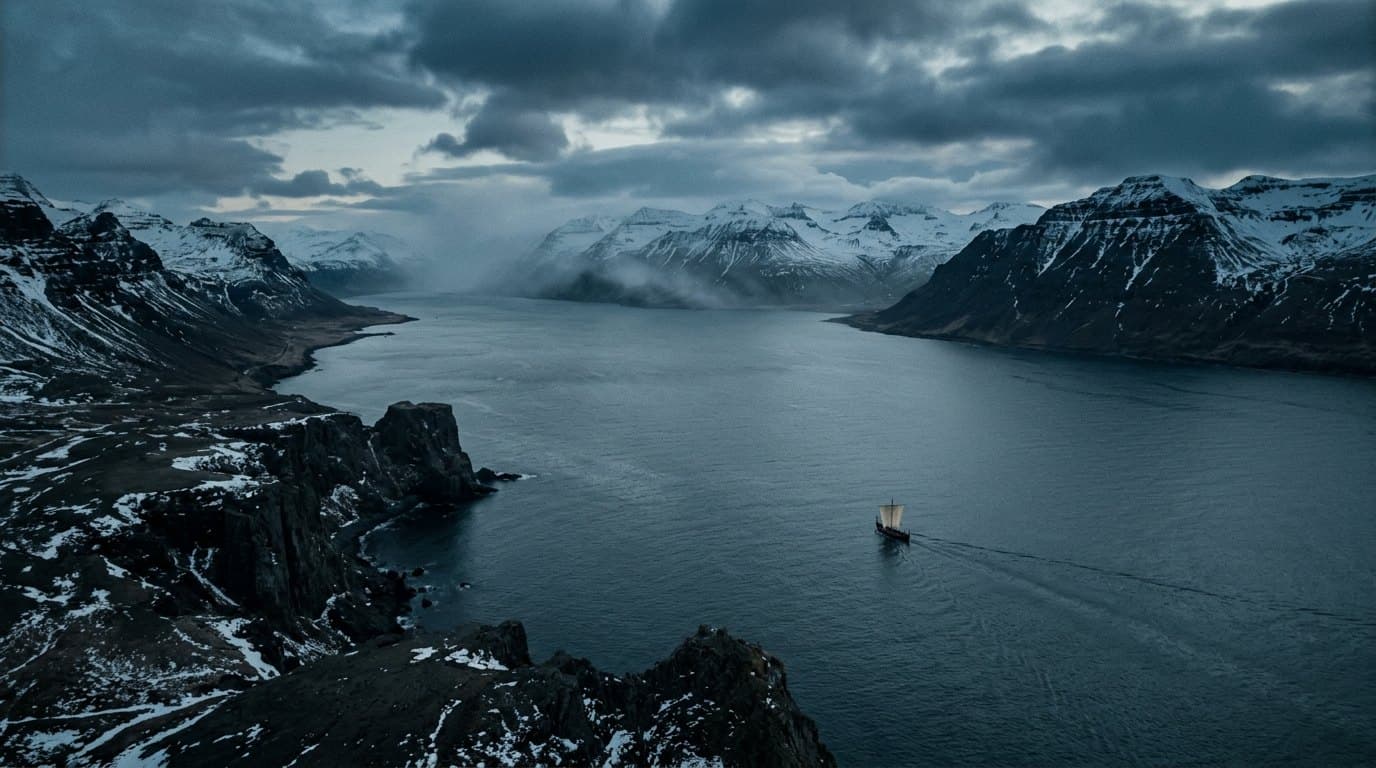
Distant Thunder is the waiting half of the story. It is the fifth single by VARGA, the Nordic duo behind Neo Viking Rock Trap, released on Nordlys Recordings as NR005, and it is the other side of an absence — one of them away at war, the other holding the coast through a storm.
This time she went, and he stayed.
It works both ways and it always has. They trade it. Whoever the season needs on the water goes on the water, and whoever the coast needs stays on the coast, and there is no ceremony about which is which because both of them have done both. This autumn the raid was hers.
They tell the going. Nobody tells the staying.
The staying is not smaller. It is longer, which is worse, and it has no shape to it — no wind to read, no oar to pull, no moment where something is decided. Just the same headland every day and the same empty line where the sea stops.
Reign held the coast through the autumn. That phrase does a lot of work and hides most of it. It means the byres and the drying racks and the roof of the long hall after the gale took the north end. It means the two families who came up the coast with nothing and had to be fed out of stores that were already short. It means the man from further inland who came to test what was left, and found out, and went home.
It means not saying, out loud, in front of anyone, the number of days.
A man built for going out, standing still for four months, is its own kind of shieldwall. Nobody writes that one down either.
The storm came in the last week of the season, the kind the old people get quiet about. It came from the south-west with the light going green under it and it took three days to arrive. You could hear it before you could see anything — a low sound with no source, out past the headland, hours ahead of the cloud.
That is what the song is called after. Not the storm. The sound of it before it gets there.
Because that is the whole condition. Something enormous is coming and you cannot see it and you cannot stop it and you cannot know whether it is the thing you have been waiting for or the thing you have been dreading, and it is going to take three days either way. So you go and check the byres again.
He was on the headland when it broke, because of course he was.
And in the last light of the third day, out past the rain, low and small and impossible to be sure about — a sail.
The song ends there. It does not tell you whose. That is deliberate, and it is the most honest thing in the saga, because at that distance in that light he could not have known either. He stood in the rain looking at a white mark on the water and he did not know yet.
Some part of the waiting never ends. It just stops being about that particular ship.